Mastering the 2026–2027 Kids School Year Planner
The transition into a new academic year often brings a mix of excitement and anxiety for families. Between juggling extracurriculars, tracking homework assignments, and ensuring long-term projects are completed on time, the organizational load can feel heavy. This is where a dedicated tool like the 2026–2027 Kids School Year Planner steps in. It is not merely a calendar; it is a comprehensive system designed to bring structure to the chaos of the school year. By combining colorful, engaging layouts with rigorous academic tracking features, this planner serves as a bridge between a student’s daily responsibilities and their long-term goals.
Understanding the Core Features
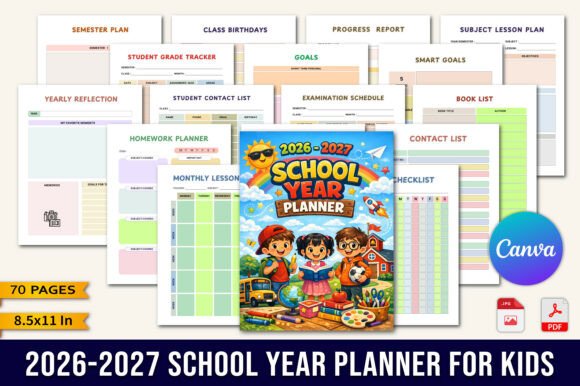
At its heart, the 2026–2027 Kids School Year Planner is built to support the entire lifecycle of the school year. It moves beyond simple date tracking to offer a suite of tools that address specific academic needs. The inclusion of a Full Year Calendar allows for big-picture planning, while the Daily Planner and Weekly Lesson Plan sections drill down into the specifics of day-to-day tasks.
For students who struggle with organization, features like the Homework Tracker and Examination Schedule are invaluable. They provide a visual representation of upcoming deadlines, helping to reduce last-minute cramming. Furthermore, the Reading Log and Book List encourage consistent literacy habits, while the Grade Tracker offers a transparent view of academic performance over time. The planner also acknowledges the social aspect of school through features like the Student Contact List, Teacher Contact List, and Class Birthdays, making it a holistic hub for a child's school life.
A Tool for Every Role in Education
The utility of the 2026–2027 Kids School Year Planner extends far beyond the student sitting in the classroom. Different stakeholders interact with academic planning in unique ways, and this tool adapts to serve those varying needs.
For Parents and Guardians
For adults managing a household, this planner offers peace of mind. It acts as a central repository for information, eliminating the need to hunt through backpacks for permission slips or test dates. Parents can use the Progress Tracker to monitor their child's development and the Contact List to quickly reach teachers or other parents. The visual nature of the planner, with its kid-friendly design, also makes it easier to involve children in their own planning, fostering independence from an early age.
For Educators and Tutors
Teachers and private tutors can leverage the structure of this planner to standardize how they communicate expectations to students and parents. The Subject Lesson Plan and Monthly Lesson Plans sections can serve as templates for outlining curriculum goals. For tutors, the Student Analysis and Smart Goals sections provide a framework for setting targeted objectives with their students, ensuring that every session is purposeful and aligned with the student's academic needs.
For Homeschooling Families
The specific inclusion of Homeschool Goals and Semester Plans makes this planner particularly relevant for the homeschooling community. Homeschooling parents often bear the dual burden of educator and administrator. This planner helps streamline that workload by offering dedicated space for curriculum mapping, resource lists (like the Book List), and long-term vision planning via the Vision Board and Yearly Reflection pages.
Evaluating Priorities: What Matters Most?
When deciding if the 2026–2027 Kids School Year Planner is the right fit, different users will weigh various factors based on their specific circumstances.
Ease of Use vs. Depth of Detail
Beginners or younger students might prioritize ease of use. They need a layout that is intuitive and not overwhelming. The colorful design and clear labeling of sections like the Daily Planner and Homework Planner cater to this need, making organization feel less like a chore and more like an engaging activity.
Conversely, advanced students or parents managing complex schedules may prioritize depth of detail. For them, the value lies in granular tools like the Examination Schedule, Project Planner, and Class Volunteers tracker. These features allow for a level of precision that generic planners often lack.
Digital Flexibility and Presentation
In an increasingly digital world, flexibility is key. The availability of an Editable Canva Link alongside High-Quality Ready-to-Upload PDF Files addresses this perfectly. Users who prefer handwriting can print the PDFs, while those who like typing or need to make frequent changes can utilize the Canva templates. This dual-format approach ensures the planner fits into various workflows, whether on a tablet or a physical desk.
Long-Term Utility and Reflection
For the goal-oriented user, long-term usefulness is the priority. Features like the Achievements Rewards, Yearly Reflection, and Goal Tracker transform the planner from a simple scheduling tool into a record of growth. At the end of the 2026-2027 school year, the student doesn't just have a list of completed tasks; they have a documented journey of their academic and personal development.
Practical Applications Across Scenarios
To truly understand the value of the 2026–2027 Kids School Year Planner, it helps to visualize it in action.
- The Busy Middle Schooler: A student involved in sports and music can use the School Timetable alongside the Class Schedule to visualize their week. They can block out practice times and ensure homework is slotted in between, using the Study Checklist to prepare for upcoming tests without sacrificing their hobbies.
- The Creative Elementary Student: For a younger child, the Vision Board and Achievements Rewards sections can be a source of motivation. They can paste stickers or draw pictures representing their goals, making the abstract concept of "planning" tangible and fun.
- The Organized Parent: A parent can use the Project Planner to break down a large science fair project into manageable chunks. By mapping out research, construction, and presentation phases on the calendar, they can help their child avoid the panic of a last-minute rush.
- The Small Business Owner (Tutoring Service): A small business owner running a tutoring center might use the Class List and Student Grade Tracker features to manage client progress reports. The professional layout helps in presenting data to parents during meetings, adding a layer of credibility to their services.
Conclusion
The 2026–2027 Kids School Year Planner is more than just a collection of pages; it is a versatile ecosystem for academic success. By offering a blend of structured tracking, goal-setting, and flexible digital/physical formats, it caters to a wide spectrum of users. Whether you are a parent seeking to instill good habits, a teacher aiming to provide structure, or a student looking to take control of your education, this planner provides the framework necessary to navigate the upcoming school year with confidence and clarity. Its thoughtful design ensures that organization is not just achievable, but enjoyable.