100 Calming Strategy Cards for Kids: A Practical Guide to Emotional Regulation
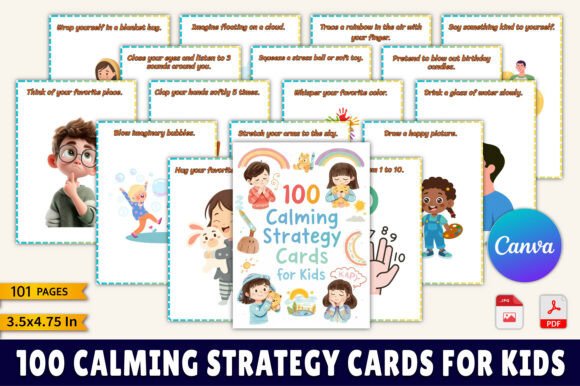
Helping children navigate the complex world of emotions is one of the most significant challenges parents, educators, and therapists face. When a child experiences a "big feeling"—whether it is overwhelming anxiety, explosive anger, or deep frustration—they often lack the vocabulary or cognitive tools to process what is happening inside their bodies. This is where 100 Calming Strategy Cards for Kids becomes an invaluable resource. Rather than offering abstract advice, these cards provide concrete, actionable strategies that transform emotional management into a playful and engaging activity.
Understanding the Need for Emotional Regulation Tools
Modern childhood is filled with stimulation. From academic pressures to social dynamics and screen time, children are constantly processing information. When the nervous system becomes overloaded, a child’s behavior often reflects their internal chaos. We see tantrums, withdrawal, aggression, or tears. Traditional methods of discipline often fail in these moments because the child is not being "naughty"—they are dysregulated. They need tools to calm their nervous system before they can listen to logic.
The goal of using resources like the 100 Calming Strategy Cards for Kids is not to suppress emotions, but to teach children how to sit with them and move through them safely. By introducing a variety of coping mechanisms, adults can empower children to find what works for them personally, building a foundation for lifelong emotional resilience.
What Are the 100 Calming Strategy Cards?
At its core, this resource is a curated collection of prompts designed to interrupt the stress cycle. The 100 Calming Strategy Cards for Kids include a wide range of techniques, from physiological interventions like deep breathing to imaginative play and mindfulness. Because the prompts are presented as individual cards, they feel manageable. A child doesn't have to learn a whole book of rules; they just need to try one strategy at a time.
The versatility of these cards allows them to be used in multiple settings. Whether you are a teacher looking for a "cool down" corner activity, a therapist working on sensory integration, or a parent trying to navigate a difficult bedtime routine, the 100 Calming Strategy Cards for Kids offer a flexible solution.
Practical Applications and Scenarios
To truly understand the value of this resource, it helps to look at specific scenarios where emotional support is required.
In the Classroom Environment
Teachers often have limited time and resources to manage individual emotional crises. A designated "calm down corner" equipped with the 100 Calming Strategy Cards for Kids allows students to self-regulate without disrupting the class. For example, a child feeling overwhelmed by a math test can select a card featuring a visualization technique, such as imagining a safe, quiet place, to lower their heart rate before returning to their work. This fosters independence and reduces the emotional burden on the educator.
For Parents and Caregivers
Home life is where children often feel safest to let their guards down, which can sometimes lead to meltdowns after a long day at school. Parents can use the 100 Calming Strategy Cards for Kids during these high-stress moments. Instead of trying to reason with a screaming child, a parent can offer a card that suggests "blowing bubbles" or "pretending to be a butterfly." These playful prompts shift the child’s focus from the emotion to the activity, engaging the parasympathetic nervous system to induce calm.
Therapeutic Settings
Occupational therapists and child psychologists frequently use play-based interventions. The 100 Calming Strategy Cards for Kids serve as an excellent icebreaker or a "toolbox" for sessions. A therapist might use a card suggesting "gentle movement" to help a child with sensory processing disorder release pent-up energy, or use a "tracing a rainbow" prompt to practice fine motor skills while simultaneously engaging in mindfulness.
Breaking Down the Strategies
The effectiveness of the 100 Calming Strategy Cards for Kids lies in the diversity of the prompts. Children have different sensory preferences and triggers, so a "one size fits all" approach rarely works. The cards cover several key categories:
- Breathing Exercises: Techniques like "balloon breathing" or "smell the flower, blow out the candle" make deep breathing accessible and fun for young lungs.
- Visualization and Imagination: Prompts that ask children to imagine they are a cloud floating or a tree with deep roots help ground them in the present moment.
- Gentle Movement: Yoga-inspired poses or simple stretches allow children to release physical tension associated with stress.
- Sensory Focus: Activities like tracing textures or focusing on specific sounds help redirect attention away from anxiety triggers.
By having 100 different options, the 100 Calming Strategy Cards for Kids ensure that the novelty doesn't wear off. A child can pick a new card every day, keeping the practice of mindfulness fresh and exciting.
Implementation Tips for Maximum Benefit
Simply having the cards is not enough; how they are introduced matters. Here are some recommendations for using the 100 Calming Strategy Cards for Kids effectively:
- Practice When Calm: Do not wait for a meltdown to introduce the cards. Use them during calm moments so the child becomes familiar with the activities. When a stressful moment arises, the strategy will feel familiar rather than foreign.
- Let the Child Lead: Allow the child to pick the card. This gives them a sense of agency and control, which is often what they feel they have lost during an emotional outburst.
- Model the Behavior: Adults should participate too. If a card suggests deep breathing, do it with the child. Modeling emotional regulation shows children that these are universal human skills, not just "kid stuff."
- Create a Routine: Consider using a card as part of a morning routine to set a positive tone for the day, or as a wind-down activity before bed.
The Digital Advantage: Editable and Printable
One of the standout features of the 100 Calming Strategy Cards for Kids resource is the inclusion of editable Canva links and high-quality PDFs. This flexibility is crucial for modern users. Parents can print the cards and laminate them for durability, ensuring they survive the bottom of a backpack or a messy playroom. Teachers can use the editable templates to customize the language or add specific instructions relevant to their classroom rules. This adaptability ensures that the 100 Calming Strategy Cards for Kids can be tailored to fit the unique needs of any environment or child.
Building Long-Term Resilience
The ultimate goal of using the 100 Calming Strategy Cards for Kids is to move from external regulation (adults helping the child calm down) to self-regulation (the child calming themselves down). Over time, a child who regularly practices these techniques will begin to internalize them. They will learn to recognize the physical signs of stress in their own bodies and instinctively reach for a tool—like deep breathing or visualization—to manage it.
This process builds emotional intelligence. Children learn that emotions are not permanent and that they have the power to influence their own state of mind. The 100 Calming Strategy Cards for Kids act as the bridge between feeling out of control and finding one's center.
Conclusion
In a world that can often feel chaotic for developing minds, providing children with a tangible resource for calm is a gift. The 100 Calming Strategy Cards for Kids offer a simple, effective, and joyful way to support emotional well-being. By integrating these cards into daily life, adults can help children build the resilience, confidence, and mindfulness skills they need to thrive. Whether used in a classroom, a therapy office, or a living room, these cards are a powerful step toward raising emotionally healthy children.